PRESS RELEASE
Containing more than 100,000 images, this is the largest survey of mammals and birds ever conducted in Europe, providing a continent-wide snapshot of wildlife. It involved 160 ecologists and zoologists from 118 research organisations, universities, museums and parks in 20 countries, including Fondazione Edmund Mach, working in collaboration with MUSE, Stelvio National Park and Paneveggio Pale di San Martino Nature Park in Trentino, as well as numerous other Italian organisations, including the University of Florence.
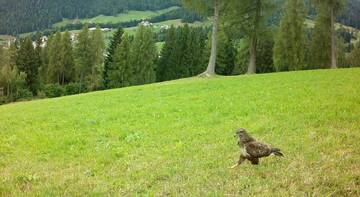
Over the past five years, hundreds of professionals and volunteers have joined forces every autumn to deploy camera traps simultaneously in mountains, forests, farmland and along beaches at more than 1,000 sites across 20 European countries. Their shared project, Snapshot Europe, is the largest open-access survey – a live inventory – of mammals and birds ever carried out across an entire continent. A data paper presenting the results has recently been published in the prestigious journal Ecology.
Snapshot Europe was launched in 2021 by the Max Planck Institute of Animal Behavior in Germany and Euromammals, the European network dedicated to the study of mammal movement ecology, coordinated by Fondazione Edmund Mach. Its aim is to make large-scale surveys of birds and mammals possible across national borders. Through standardised data collection and open access to the results, Snapshot Europe is building an archive that can help answer key questions about biodiversity, human disturbance and the conservation of numerous species. This is a particularly valuable resource, as European wildlife populations often extend across several national borders and are subject to different legislative frameworks. The benefits of this initiative are now reaching a global scale: Snapshot Global was established to survey regions across all continents using the same standardised camera-trap protocol.
Through close collaboration, Fondazione Edmund Mach and MUSE – Science Museum of Trento monitor wildlife and the effects of human activities in several areas of the Province of Trento. These include Paneveggio Pale di San Martino Nature Park and the Trentino sector of Stelvio National Park, whose data have been included in the study.
"I was immediately impressed by the extraordinary potential of this initiative, proposed by colleagues at the Max Planck Institute of Animal Behavior in Konstanz, particularly Fabiola Iannarilli, a postdoctoral researcher in Martin Wikelski's group. By drawing on the already well-established and extensive Euromammals network, we were able to involve dozens of potential collaborators," says Francesca Cagnacci, coordinator of Euromammals, head of the Animal Ecology research group at FEM's Research and Innovation Centre, and senior author of the study. "Within just a few months, Snapshot Europe had already brought together collaborators from 20 countries and dozens of study areas across Europe."
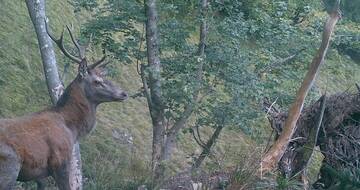
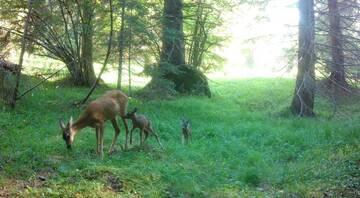
Following a standardised protocol, collaborators deploy camera traps every year between August and November in natural environments, as well as in cities and urban parks. The cameras, positioned at knee height, capture a series of images whenever an infrared sensor detects movement. Once all the data have been collected, the Snapshot Europe team processes the results for publication. After excluding images of people for privacy reasons, the team found that the most frequently recorded species was the red deer, followed closely by the roe deer. Other commonly detected species included wild boar, red fox and European rabbit.
The survey in the Trentino sector of Stelvio National Park, in Val di Pejo, was carried out at some of the highest elevations recorded across the entire Snapshot Europe project, with camera traps installed at altitudes of up to 2,400 metres. Luca Pedrotti, the Park's scientific coordinator, highlights the versatility of camera traps for wildlife monitoring in the Alps: "We recorded typical Alpine species, such as chamois and Alpine ibex, as well as others expanding into higher-altitude areas, such as roe deer and red deer. We also detected foxes, rock ptarmigans and mustelids."
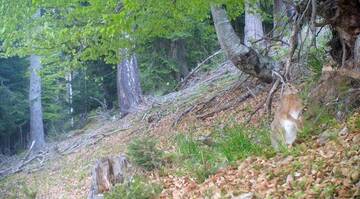
In terms of wildlife diversity, Foreste Casentinesi National Park in Italy ranked first overall, with as many as 15 species documented. Ilaria Greco, a researcher at the University of Florence who coordinated and carried out the survey in this area in collaboration with the Park authority, explains: "Over the course of the project, we collected a wealth of valuable data confirming the extraordinary biodiversity and species richness of this area, including the presence of rare and elusive animals such as the European polecat and the wildcat." These findings are complemented by numerous other observations from across the Italian peninsula.
Against this background, Francesco Rovero and Marco Salvatori, from MUSE's Research Office and co-authors of the study, highlight the importance of the project: "Only systematic, standardised surveys can provide reliable information on wildlife distribution and behaviour, as well as on how wild animals respond to human activities. This represents a valuable scientific contribution to improving conservation and wildlife management efforts."
Participating organisations: Fondazione Edmund Mach (FEM), MUSE, Stelvio National Park, Paneveggio Pale di San Martino Nature Park, University of Florence, University of Insubria, Ethoikos Foundation, University of Udine, ISPRA (Italian Institute for Environmental Protection and Research), University of Turin, Foreste Casentinesi National Park and University of Pisa.
Further information
- Snapshot Global (https://snapshot-global.org/) brings together scientists and conservation experts to monitor wildlife through standardised camera-trap surveys across several continents. Founded in the United States in 2019, Snapshot Global now covers Europe, Japan, Brazil, Chile and Paraguay, with further countries preparing to join.
- Euromammals (https://euromammals.org/) is a collaborative initiative launched in 2008 to promote the study of terrestrial mammal ecology in Europe. Its database and coordination activities are based at Fondazione Edmund Mach in San Michele all'Adige, Italy.
Publication
Iannarilli et al. (2026). Snapshot Europe 2021–2022: The first public dataset from a Europe-wide camera-trap survey of terrestrial vertebrates. Ecology.
Contacts for Italy/Trentino
FONDAZIONE EDMUND MACH – Press Office
+39 339 7392973
Francesca Cagnacci