PRESS RELEASE
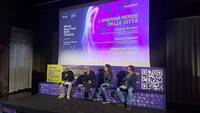
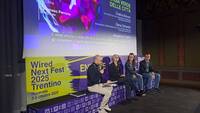
Urban green spaces as a source of energy, resilience and well-being were at the centre of today’s event held in Rovereto, at Palazzo del Bene, as part of the Wired Next Fest, titled “The Green Energy of Cities”.
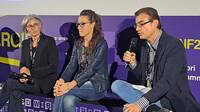
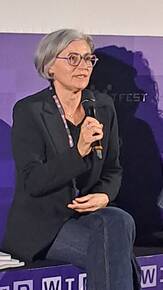
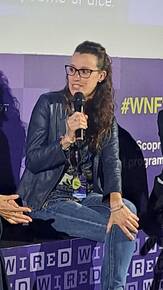
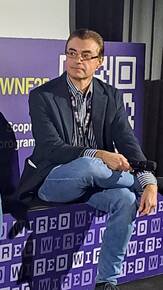
Moderated by Tommaso Perrone, journalist at Wired, the discussion featured Elena Gottardini, Head of the Environmental Botany Research Unit at Fondazione Edmund Mach, Alessandro Paletto, senior researcher at the Council for Agricultural Research and Economics (CREA), and Cristina Bonomi, educational tutor of the FEM Higher Education course “Advanced Technician for Sustainable Green Spaces”.
Urban green infrastructures are a key resource in a world of increasing urbanisation. “It is estimated,” explained Paletto, “that by 2030, 60% of the global population will live in urban areas, which, despite covering only 3% of the Earth’s surface, account for 70% of energy consumption and 75% of carbon dioxide emissions.”
Green infrastructures — the network of natural and semi-natural spaces within urban environments — provide a wide range of environmental, social and economic benefits essential to citizens’ well-being and quality of life. These include climate regulation (mitigation of climate change), microclimate improvement (reducing the heat island effect), psychological and physical well-being, food provision, urban biodiversity habitats, and energy saving. “Buildings equipped with green roofs,” noted Paletto, “can reduce annual energy consumption for air conditioning by up to 25%.”
Urban greenery is closely linked to the aerobiome — the ensemble of biological particles in the atmosphere such as pollen, spores and bacteria. A new vision is emerging that recognises exposure to a wide variety of airborne microorganisms as fundamental to human health. The biodiversity of the air, studied at Fondazione Edmund Mach by the Environmental Botany Research Unit, which also coordinates the Aerobiological Monitoring Centre, is now the focus of the new European project AiRBiD.
“The project aims to understand,” explained Gottardini, “how biological particles in the atmosphere are influenced by the presence and type of green areas in urban settings, across five European cities including Trento, and how these are connected to citizens’ health and well-being.”
In this global context, where green energy from cities is becoming a priority, education and training also play a crucial role. The post-diploma course “Tecnico Superiore per il Verde Sostenibile”, offered for over twenty years by Fondazione Edmund Mach, goes beyond the aesthetic design and management of urban green spaces, turning them into a key resource for building sustainable environments.
“These spaces,” said Bonomi, “help reduce the environmental impact of metropolitan areas while improving air quality, biodiversity and citizens’ well-being.”
The WIRED Next Fest is organised by WIRED Italia in partnership with the Provincia autonoma di Trento – Assessorato allo sviluppo economico, lavoro, famiglia, università e ricerca, Trentino Marketing, Trentino Sviluppo, Azienda per il Turismo Rovereto, Vallagarina e Monte Baldo, and the Comune di Rovereto.
The programme is developed by a Scientific Committee, chaired by the Director of WIRED Italia, with the participation of the Università degli Studi di Trento, Fondazione Bruno Kessler, Fondazione Edmund Mach, Fondazione Hub Innovazione Trentino, Istituto provinciale per la ricerca e la sperimentazione educativa (IPRASE), and the MUSE – Museo delle Scienze.
(sc)